
Welding
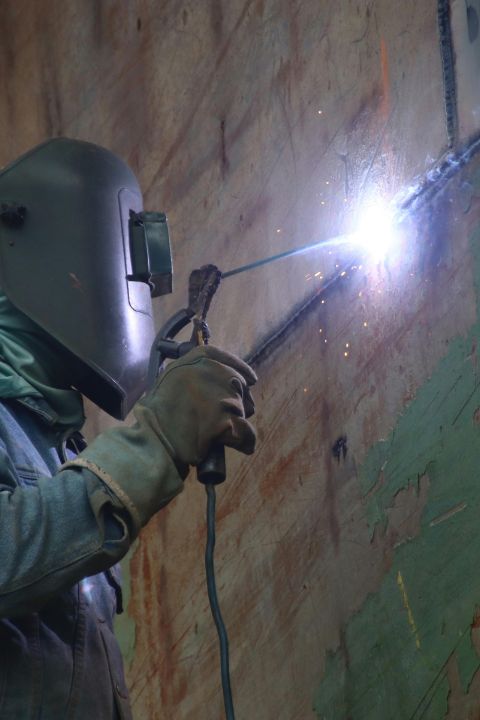
Welding is a technological process used to join two or more metallic or thermoplastic materials, with or without the use of additional filler material. Its basic principle is based on the creation of a strong molecular or metallurgical bond between the surfaces, allowing the final result to behave as a single solid structure. It is widely used in industry, construction, and mechanical engineering.
There are various types of welding, with the most common being arc welding (electric welding), gas welding, and TIG and MIG/MAG welding. Each method has its own characteristics and is selected depending on the type of material, its thickness, and the required strength of the joint. For example, TIG welding provides high precision and a clean finish, while MIG/MAG welding is faster and more suitable for mass production.
During the welding process, high temperatures are generated, melting the metal at the point of connection. As the material cools, a strong and durable joint is formed. The quality of the weld depends on factors such as surface cleanliness, proper equipment settings, and the experience of the welder.
However, welding also involves certain risks, such as burns, exposure to intense radiation, and harmful fumes. For this reason, the use of appropriate protective equipment is essential, including welding masks, gloves, and protective clothing, as well as compliance with safety regulations in the workplace.
In modern industry, welding is a fundamental production and manufacturing process, with applications ranging from small metal structures to large industrial installations and infrastructure projects. The continuous advancement of technology has led to more precise, faster, and safer welding methods, significantly improving the quality of constructions.